
Introduction
Imagine this: you’re in a sales meeting, armed with the slickest slides, the most persuasive pitch, and every competitive fact memorized. You’re doing everything “right.”
And yet…weeks later, the deal goes dark. No emails, no replies, nothing.
Here’s the uncomfortable truth: your effort doesn’t close deals. The buyer’s engagement does.
In modern B2B sales, the most powerful lever is not more outreach. It’s seeing everything that matters, in real time, across every stakeholder and stage of the journey. That’s what we call buyer velocity—the speed and direction of your buyer’s actions—and understanding it is the difference between deals that stall and deals that sprint to the finish line.
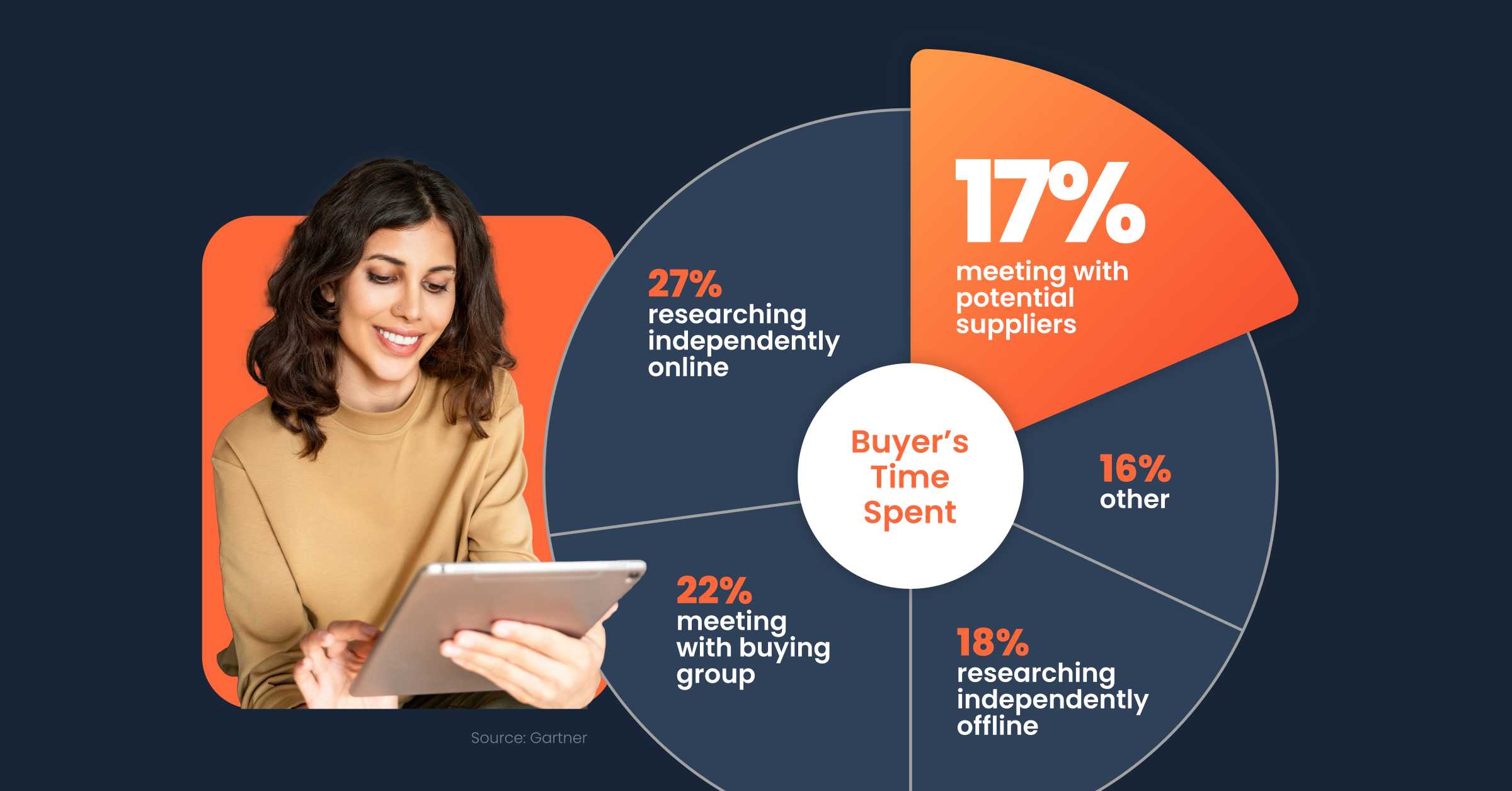
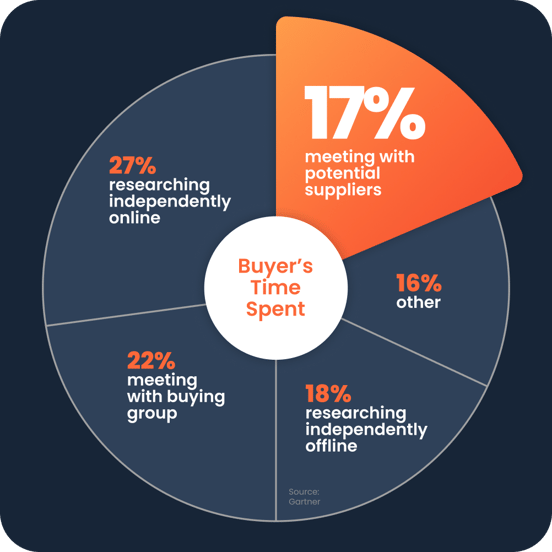
According to Gartner, sellers influence only 17% of the total buyer's journey. Five years ago? That was closer to 50%. Three years from now, that number could shift closer to zero.
Many teams realized that speed-to-lead isn’t enough. Fast follow-ups matter, but they don’t guarantee engagement.
Buyers want immediate access to information. They want to experience the product on their own terms. Yet every traditional sales process forces them to schedule a live demo, wait for availability, and sit through a curated presentation. This kills momentum, lengthens sales cycles, and leaves deals stuck in a state of limbo.
That’s where demo automation changes the game. By delivering on-demand, consistent product experiences, you give buyers the ability to explore the product when and how they want—while automatically capturing who engages, how, and for how long.
Every replay, every click, and every shared demo becomes a measurable signal of intent, giving your team a real-time view of engagement and the tools to focus their efforts where they actually move the deal.
In this guide, we’ll show you how to take control of your sales process and make every demo count. You’ll learn strategies to work smarter, move deals faster, and win more consistently:
- Accelerate buyer velocity with demo automation
- Uncover hidden stakeholders
- Turn every interaction into a predictable, repeatable win
What is Buyer Velocity?
Buyer velocity is a shift in focus from traditional sales metrics (seller activity) to measurable buyer intent and engagement, specifically the speed and weight of a buyer's actions within a sales cycle. It is the key to identifying genuinely healthy deals and predicting their likelihood of closing.
High buyer velocity doesn’t just mean moving fast; it means removing friction, delivering the right information at the right time, and ensuring every interaction drives the buyer closer to a decision.
Key factors that influence buyer velocity:
- Clarity of information: Buyers need to quickly understand your product and its value.
- Engagement at the right time: Deliver demos, resources, and touchpoints that matter most.
- Stakeholder alignment: Identify and involve the right decision-makers early.
- Predictable processes: Repeatable workflows help buyers move confidently through the funnel.
By optimizing buyer velocity, you’re not just speeding up deals—you’re creating a more predictable, repeatable path to revenue growth.
Why Buyer Velocity Matters
The faster your buyers can move through their journey, the higher your close rates and the more predictable your revenue.
Buyer actions drive deals more than seller actions. You can send emails, schedule calls, and craft perfect demos—but if the buyer isn’t engaged, nothing happens. High buyer velocity ensures that your process adapts to the buyer’s pace, not the other way around.
Think about it:
- Engaged buyers decide faster: When buyers have what they need, they progress on their own timeline.
- Reduces friction and delays: Every unnecessary step slows momentum and risks losing the deal.
- Predictable outcomes: Focusing on buyer actions makes your forecasting and deal velocity more reliable.
- Amplifies seller efforts: Your team’s work is multiplied when buyers are moving actively, rather than waiting passively.
Deals only close when buyers act.
Why Buyer Actions are King
To truly measure interest, you must focus on what the buyer is doing, not just what the seller is sending.
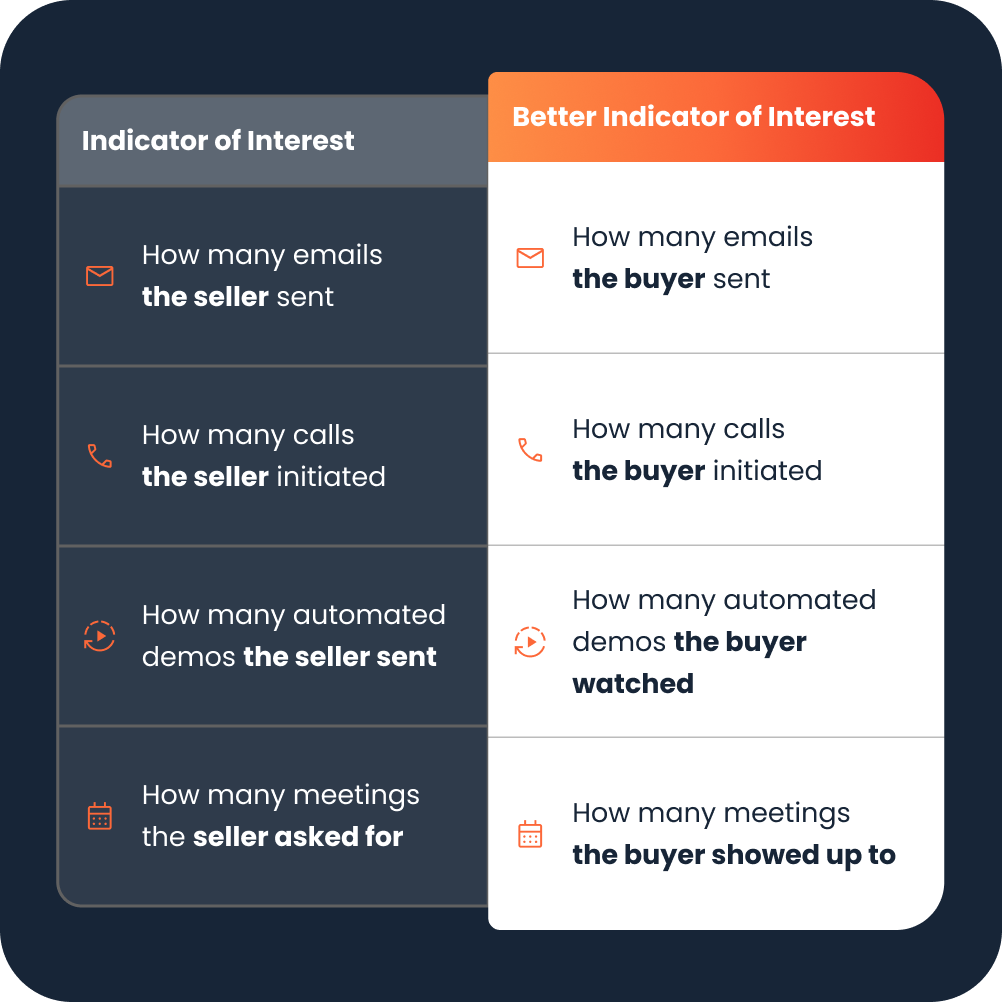
Seller actions can be infinite, but they mean nothing if the buyer remains silent. Buyer actions are the true gauge of interest.
By understanding, measuring, and implementing tactics to improve buyer velocity, you can drive a true impact on your win rates. At Consensus, for example, we were able to see a correlation between certain buyer behaviors and an increase in win rates.
The Velocity Metrics That Drive Win Rates
When it comes to accelerating deals and hitting world-class close rates, it’s not what you do—it’s what your buyers actually do. Data analysis reveals two actions that correlate more strongly than any others with significant increases in win rates: frequent and consistent meetings, and automated demo engagement.
Master these, and you can predictably move deals faster and close more.
Metric 1: Meeting Frequency Multiplies Your Win Rate
Everyone knows meetings matter. But not all meetings are created equal. The real lever is frequency and cadence. The frequency of your interactions with buyers drives momentum, builds trust, and keeps deals moving through the sales funnel.
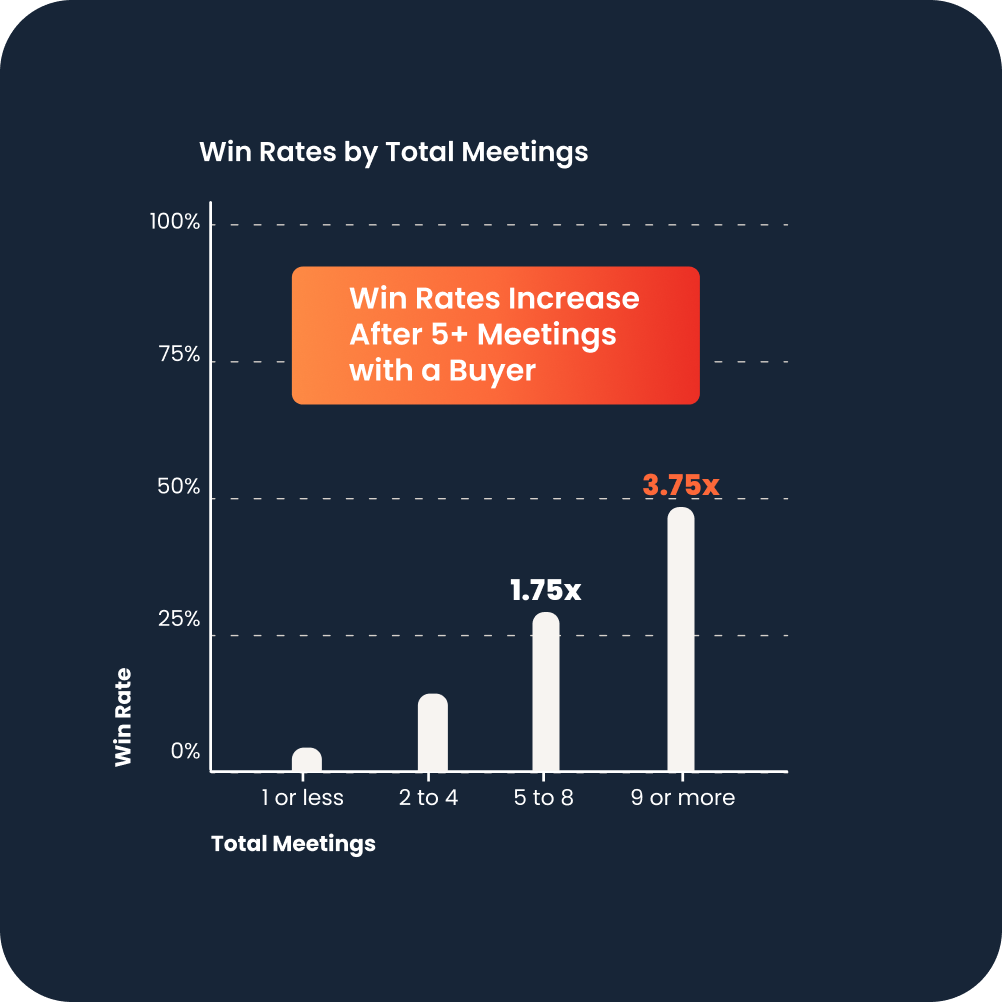
What this tells us is that deals with a weekly or better cadence are statistically more likely to close—and by a huge margin. This isn’t just theory: it’s a signal that buyers are engaged, questions are being answered, and momentum is building.
Pro Tip: Each meeting should have a purpose. A rushed, generic touchpoint won’t move the needle—but a focused session with clear next steps will.
The key here is frequency = velocity. Keep the deal top of mind without overwhelming the buyer.
Metric 2: Demo Views Are a Deal Accelerator
If meeting frequency keeps your deals in motion, demo engagement gives them momentum. Think of automated demos as your 24/7 sales assistant—always working, always showing value, and always collecting buyer intent data while you sleep.
Demo views are more than vanity metrics—they’re buyer breadcrumbs. Each view tells you who’s curious, who’s comparing, and who’s ready to buy. And when you analyze the data, a clear story emerges: the more demos your buyers view (and share), the faster and more predictably they close.
Automated demos aren’t just convenient; they provide measurable signals of buyer interest and let you scale your impact beyond one-on-one interactions. By delivering a consistent, on-demand product experience, automated demos empower buyers to self-educate and explore the features most relevant to them.
Frequency of Views
Frequency fuels familiarity. One view means curiosity. Two to four views mean serious evaluation. But once you hit nine or more views across a single opportunity, the numbers explode, win rates increase by a factor of ten.
That’s not just interest; that’s buy-in. Buyers are revisiting the demo, showing colleagues, and validating your solution internally, all before your next meeting even hits the calendar.
Virality and Stakeholder Discovery
But frequency is only half the story. The real unlock comes from virality—the invisible hand of internal sharing that happens once a demo starts making the rounds inside the buyer’s org.
Every time your demo gets shared, it’s silently introducing your solution to new decision-makers. And that’s where things get exciting: discovering even one new stakeholder increases your win rate by 6.5x.
That’s because deals don’t just close; they get approved. The faster you reach the real influencers and champions, the faster that approval chain gets cleared.
Pro Tip: Encourage buyers to share your demo with others. The more screens it hits, the more momentum you build inside the account.
Deal Acceleration: Average Days Per Stage
When buyers are this engaged, everything speeds up. Automated demos don’t just generate more interest; they compress time.
Across all data, deals with demo views see a 63% decrease in average days per stage.
That’s not a small efficiency gain. It’s a two-thirds reduction in pipeline friction, simply led by driving demo views. Here’s a look at this compounding across company size:
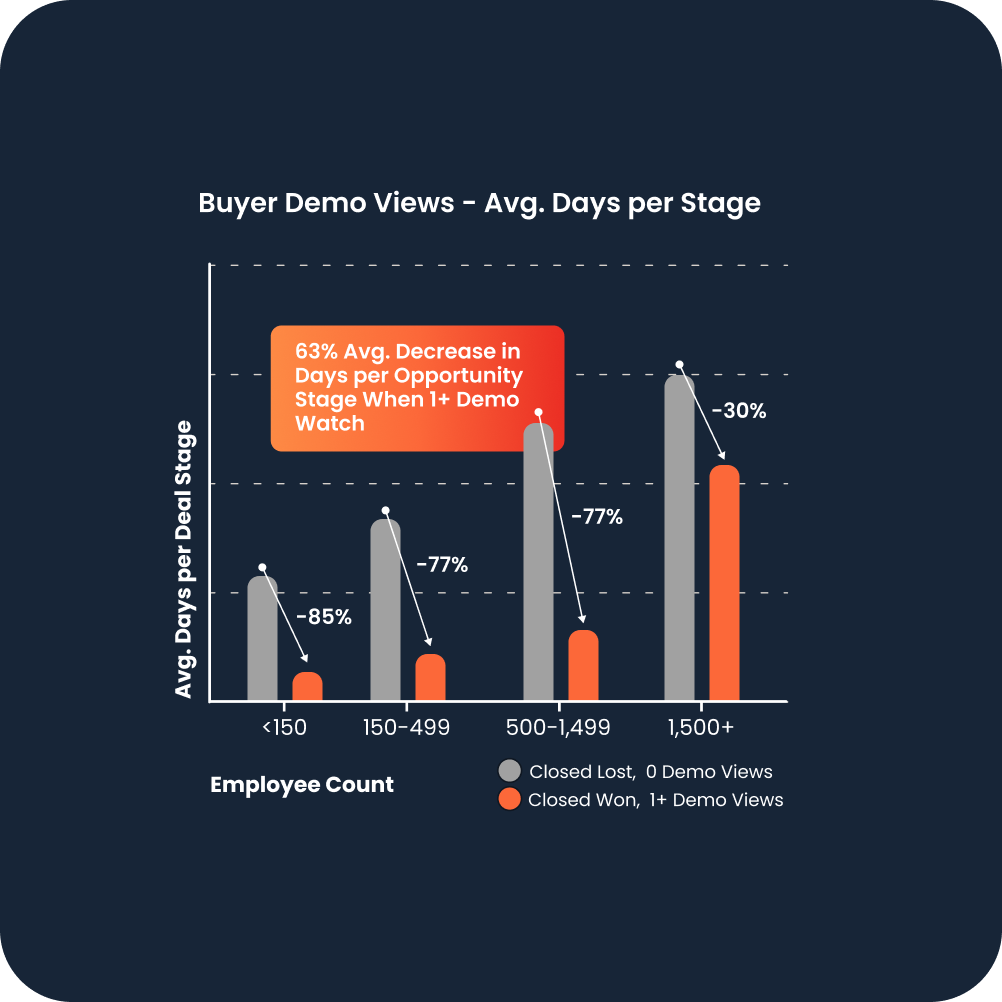
By using on-demand demos, deals move faster, conversations stay warmer, and reps spend less time chasing and more time closing.
Implementation: Introducing The Deal Momentum Score
You’ve got the data. You’ve seen how meeting frequency and demo engagement can 10x your close rates. Now it’s time to turn that insight into something your entire sales team can act on instantly.
Enter the Deal Momentum Score.
Think of it as a real-time heartbeat for every opportunity in your pipeline. It tells you, at a glance, whether a deal is gaining speed, losing steam, or flatlining entirely, and what to do about it right now.
Build a Deal Momentum Framework
For a predictive score to actually work in the real world, it has to follow three rules: simple to understand, simple to automate, and simple to act on.
- Simple to Understand
Distill everything—meetings, demos, engagement—into a single, easy-to-read number (for example, a 0–120 scale, where higher means faster momentum). If a rep can’t explain the score in under 30 seconds, it’s too complicated. - Simple to Automate
The score should run itself. Data pulls directly from your CRM and demo automation platform—no manual updates, no “rep homework.” The moment activity happens, the score updates. - Simple to Act On
A low score should immediately suggest the next move. For example:- “Get a meeting.”
- “Get a demo viewed.”
- “Re-engage the buying committee.”
Clarity drives action. Action drives momentum.
In physics, momentum equals mass times velocity. The same principle applies to deals.
- Mass (Weight): Not all actions are created equal. A scheduled meeting carries more weight than an email. A demo view from a VP carries more than a casual website click.
- Velocity (Frequency): Recency is everything. The score only counts activity from the last seven days, or scheduled for the next seven. If there’s no recent movement, momentum fades.
Together, this creates a weighted, time-sensitive score that reflects real-time buyer engagement, not wishful thinking.
Make It Predictive
Here’s where it gets exciting: this score doesn’t just describe the past—it predicts the future.
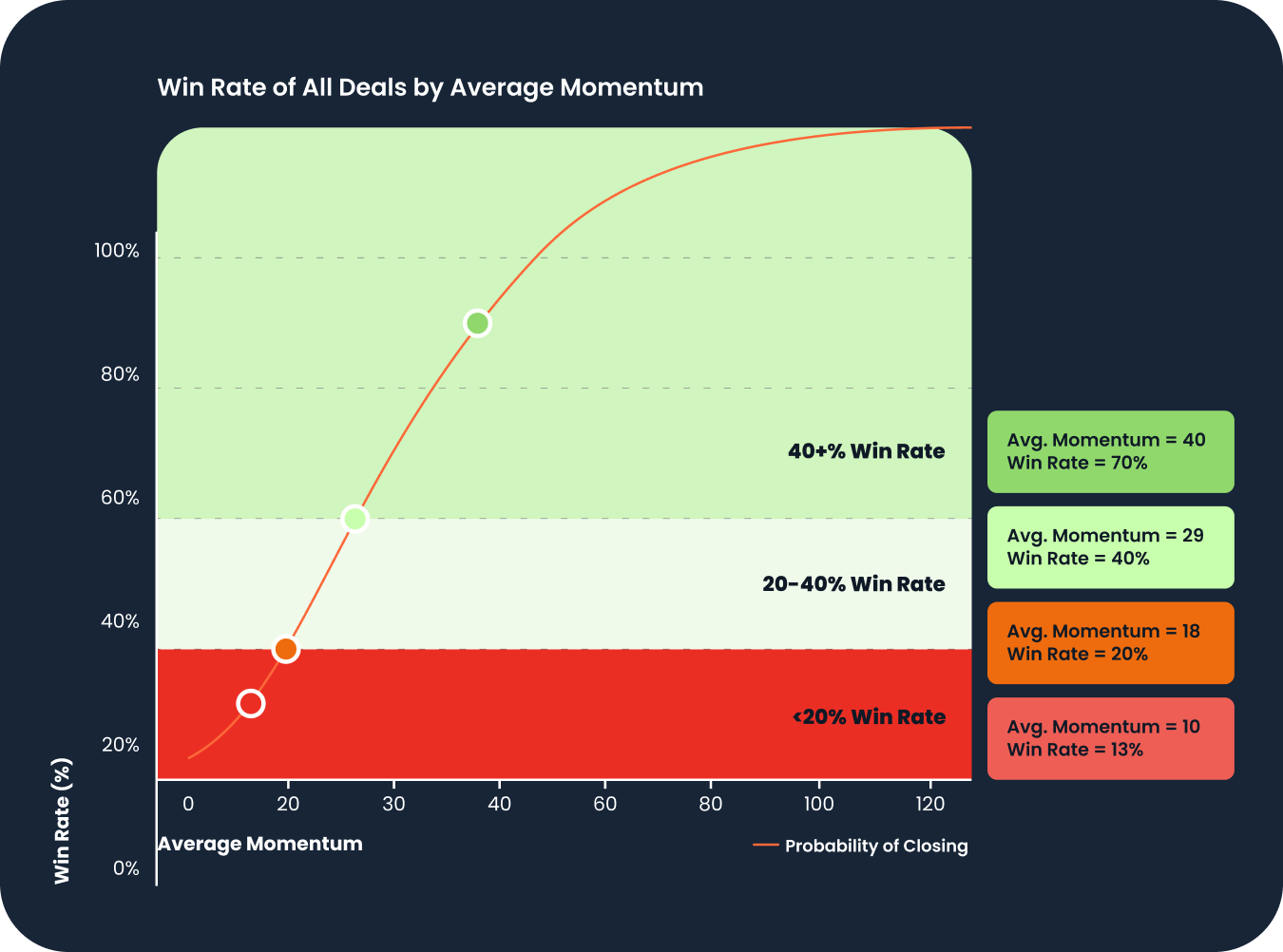
Deals that maintain a high average score (think 40+) can hit a 70% projected win rate.
The beauty of the Deal Momentum Score is its clarity in pipeline reviews. Instead of debating gut feel, managers and reps can point to one number and instantly know where to focus.
- Score is Zero — 🚨 Red Flag:
The deal’s cold. Revive it fast. Book a meeting or get a demo in front of the buyer today. - Score is Low or Trending Down — ⚠️ Danger Zone:
Momentum is slipping. Increase the meeting cadence, send personalized demos, or re-engage hidden stakeholders. - Score is High or Trending Up — ✅ Green Light:
Keep the pedal down. Buyer intent is proven; move decisively toward close.
The Deal Momentum Score provides every rep with a live dashboard of deal health, transforming sales management from guesswork into science. It also turns coaching into action: instead of “What’s happening with this deal?”, the conversation becomes “Here’s exactly what to do next.”
When you can measure momentum, you can manage it. And when you can manage it, you can multiply it.
How to Improve Buyer Velocity
Let’s be honest: timing in sales is everything.
For years, sellers have tried to “read the room”, guessing when to send the next follow-up, when to book the next call, or when to finally unveil the product demo. But in a world where buyers control the clock, guessing is a luxury you can’t afford.
The truth is, velocity dies in the waiting room. Every day a buyer waits to see your product, their excitement cools, and competitors creep in. Automating your demos isn’t just about convenience — it’s about precision. It’s about delivering the right experience at the right moment based on live buyer signals.
The Power of Timing
Think of buyer engagement like a heartbeat. Every interaction — an email open, a content click, a meeting booked — is a pulse. The trick is knowing when that pulse spikes. That’s when attention, curiosity, and intent are at their peak.
Using a Demo Automation Platform like Consensus, you not only allow buyers to guide and self-serve their own buying journey by giving them on-demand access to video demos, tours, and simulations, but also trigger the next best action.
When demos are automated and triggered based on buyer actions, three things happen almost immediately:
- Momentum compounds. Buyers stay engaged while they’re most interested — no scheduling friction, no “let’s circle back next week.”
- Reps reclaim time. Instead of chasing calendars, your sellers focus on analyzing engagement and advancing deals.
- Data turns predictive. Each automated trigger creates measurable intent signals you can track, score, and optimize over time.
This is the heartbeat of buyer velocity: shortening the distance between curiosity and clarity.
When to Automate
To operationalize this, let’s break down the five most effective demo triggers every high-velocity sales org should automate:
- After First Touch (Awareness Trigger)
When a lead engages with your content or ad for the first time, curiosity is high — but context is thin.
Send: A short, 2–3 minute overview demo that sets the hook.
Goal: Turn awareness into interest. - After Discovery (Validation Trigger)
The buyer now understands the problem. They’re evaluating options.
Send: A role-based demo highlighting how your product solves their specific challenge.
Goal: Reinforce value while momentum’s hot. - After Inactivity (Reactivation Trigger)
Deals stall. Buyers ghost. It happens.
Send: A fresh, use-case demo personalized to a new angle (“Here’s how other teams are solving this challenge right now”).
Goal: Reignite curiosity and re-enter the conversation. - After Expansion Signal (Growth Trigger)
When existing customers explore new features or departments show interest.
Send: A modular, feature-specific demo designed to cross-sell or upsell.
Goal: Turn expansion curiosity into committed revenue. - After Internal Share (Virality Trigger)
When your demo gets forwarded or watched by new stakeholders.
Send: A follow-up automated demo tailored for executive or technical decision-makers.
Goal: Guide new stakeholders to value without adding manual steps for your rep.
Buyers who engage with automated demos early in the journey move faster through the funnel. That’s because automation bridges the gap between interest and access. The moment your buyer wants to learn more, the experience is already waiting for them.
And when you combine that with velocity metrics (like consistent meeting cadence and multi-stakeholder engagement), the compounding effect is undeniable.
Conclusion
For years, the mantra in sales was simple: speed to lead wins. Be the first to respond, the first to call, the first to hit the inbox. And for a while, that worked, because attention was scarce, and being fast meant being first.
But the data tells a new story. Today, speed to demo is the true predictor of success.
In a world where buyers are more informed, more independent, and more overloaded than ever, being “first” doesn’t close deals; being relevant, responsive, and ready to deliver value does.
When buyers can see your solution: on their own time, in their own context, and with their own stakeholders—the velocity of your pipeline changes overnight.
- More meetings = more rhythm.
- More demo views = more engagement.
- More momentum = more wins.
The old playbook rewarded hustle. The new one rewards orchestration: where automation, insight, and timing align perfectly to move buyers forward.
That’s what this guide is about. It’s not just “speed” for the sake of speed—it’s speed with precision.
- Deliver the right demo at the right moment.
- Engage the right stakeholders before you even meet them.
- Measure every movement with the Deal Momentum Score so you always know what’s working—and what’s stalling.
The modern sales advantage isn’t about chasing leads faster. It’s about helping buyers learn faster. Because when you accelerate buyer understanding, you accelerate everything else.