

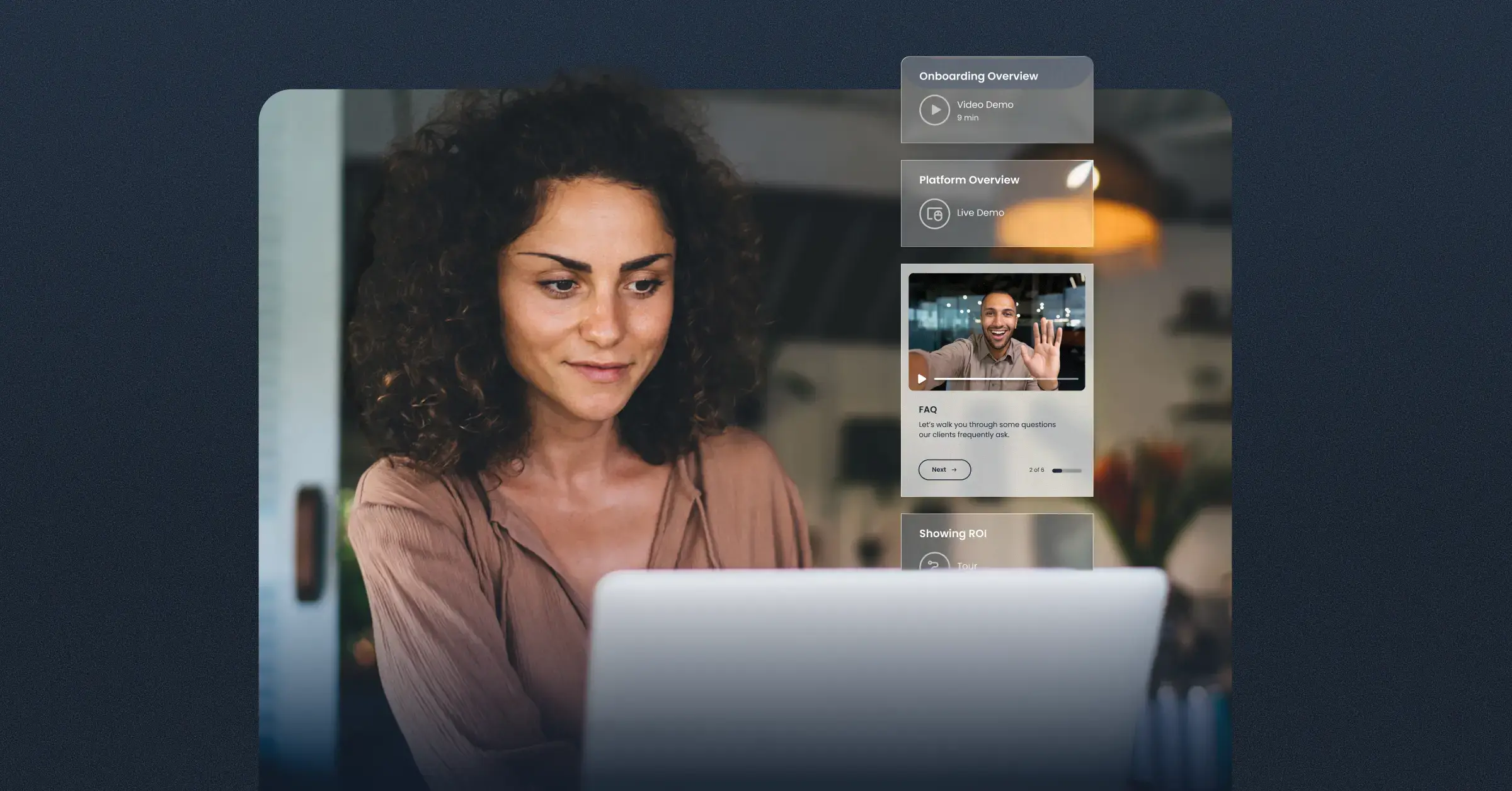
Close more deals with
Demo Automation.
Watch a Demo
Your sales engineers are maxed out, your prospects are waiting days for demos, and your competitors are showing up first. Meanwhile, 81% of buyers choose a preferred vendor before they ever speak with sales. These “antisocial buyers” are researching, comparing, and forming opinions long before anyone on your team gets a chance to present.
Demo automation changes this equation entirely. By creating self-service product experiences that buyers can access on demand, you stop losing deals to scheduling delays and start engaging stakeholders around the clock. This guide walks through exactly how to automate your sales demos, from identifying the right use cases to tracking engagement data that accelerates every conversation.
Key Insights
- Automated demos let you engage prospects during their research phase instead of losing deals to competitors who show up first.
- Demo automation eliminates scheduling lag that kills deal momentum, while capturing intent data that tells you exactly which features each stakeholder cares about.
- Automated demos let your champion share personalized product experiences internally without requiring your sales engineers to schedule repetitive calls with every stakeholder.
- Modern buyers prefer self-service and expect instant access to information on their own schedule—automated demos meet them where they are.
What Is Sales Demo Automation?
Sales demo automation uses software to create self-service, interactive product experiences that buyers access on their own time—without scheduling a live call or waiting for a sales rep. Instead of the typical back-and-forth of booking meetings, prospects get immediate access to your product story whenever they want it.
Think of it as giving buyers the keys to explore your solution at 10 PM or during their lunch break. Meanwhile, your sales team receives data about what those buyers actually care about.
Here's what sets demo automation apart from simply recording a product video:
- On-demand access: Buyers watch or interact with demos whenever they want, skipping the longer wait typical for scheduling live demos.
- Self-guided exploration: Prospects choose which features matter to their specific pain points, creating a personalized experience.
- Intent data capture: Sales teams automatically receive engagement insights showing exactly what resonated with each viewer.
Live demos require calendar coordination, often involve repetitive presentations of the same features, and leave sales engineers stretched thin. Automated demos handle the repetitive work, so your team can focus on conversations that actually move deals forward.
Why Automate Your Sales Demos?
Picture this: Your sales engineering team is drowning. Every qualified lead wants a demo, but there are only so many hours in the day. Calendars are packed weeks out, and by the time prospects finally see your product, half of them have already moved on to competitors who showed up faster.
This scenario plays out constantly in B2B sales, and it's getting worse as buying behavior shifts toward self-service. According to Gartner, 67% of B2B buyers say they prefer a rep-free buying experience, and 64% of B2B buyers at the manager level and above are Millennials or Gen Z.
Here's the uncomfortable truth: 69% of the purchase process happens before your buyer ever engages with sales. Demo automation addresses this reality directly with:
- Shorter sales cycles: Scheduling delays and demo lag time kill deal momentum—automation eliminates both.
- Better qualified conversations: Buyers arrive educated and ready to talk specifics rather than starting from scratch.
- Scalable coverage: Reaching multiple stakeholders simultaneously becomes possible without adding headcount.
- Competitive advantage: Early access matters. Buyers who’ve already chosen a preferred vendor 81% of the time are choosing during research, not after.
If your average deal involves 6-10 stakeholders (which Gartner confirms is typical), and each stakeholder wants to understand your product, you can either schedule dozens of repetitive calls or let automation do the heavy lifting.
How to Automate Sales Demos in Six Steps
Getting started with demo automation doesn't require a massive overhaul of your sales process. The key is starting strategically and building from there.
1. Identify your highest-impact demo use cases
Not every demo scenario benefits equally from automation. Start by looking at where your sales engineers (SEs) spend time on repetitive, high-volume presentations—first-touch discovery calls, post-meeting follow-ups, or standard feature overviews that happen the same way every time.
Which demos could a well-crafted automated experience handle just as effectively as a live call? Those are your starting points. Save live SE time for complex technical deep-dives where human expertise truly matters.
2. Gather your product assets and messaging
Before building anything, collect the raw materials: screenshots, video clips of your product in action, talk tracks your best presenters use, and positioning documents from product marketing.
Coordination matters here. Your automated demos will reach prospects at scale, so messaging consistency is critical. Work with product marketing to ensure the story you're telling aligns with your broader go-to-market strategy.
3. Storyboard the demo with AI or a template
Resist the urge to jump straight into building. Map out the narrative flow first: Which pain points will you address, in what order, and how will different buyer personas navigate through the experience?
Many demo automation platforms now offer AI-assisted storyboarding that speeds up this process. The goal is creating a clear blueprint before you start assembling screens and adding interactivity.
4. Build and edit your interactive demo
Now comes the assembly work. Using your demo automation software, combine screens, add annotations and hotspots, and create branching paths that let buyers choose their own adventure based on what matters to them.
One critical principle: Keep each demo focused on a single use case or persona. Trying to cover everything in one demo creates a bloated experience that serves no one well. Five focused demos work better than one overwhelming one.
5. Personalize the buyer experience
Personalization transforms a generic product tour into something that feels tailored. Options include letting buyers select which features they want to explore, dynamically inserting company names, and creating different paths for different roles.
When a CFO can skip straight to ROI metrics while a technical evaluator dives into integration details, everyone gets what they actually want.
6. Track engagement and optimize with intent data
This is where demo automation becomes a strategic advantage rather than just a time-saver. Analytics reveal which features generate the most interest, how long prospects spend on different sections, and when they share demos with colleagues.
Use these insights to refine your demos over time and to prepare for live follow-up conversations. When you know a prospect spent 15 minutes on your security features and skipped pricing entirely, you can tailor your next call accordingly.
Where Automated Demos Fit in Your Sales Process
Demo automation works best as a force multiplier, not a replacement for human connection. The goal is handling repetitive work at scale while freeing your team for conversations that require expertise and nuance.
Pre-call discovery and qualification
Sending automated demos before the first live call means buyers arrive warmed up and ready to discuss specifics. Instead of spending 30 minutes on basic product orientation, you can dive straight into their unique challenges.
Meanwhile, the intent data from their demo engagement tells you exactly which features matter most. Your first call suddenly feels like a second or third call.
Mid-funnel deep dives
Deals often stall between meetings. Prospects get busy, momentum fades, and competitors swoop in. Automated demos keep your solution top-of-mind by giving buyers something valuable to explore while they wait for the next scheduled conversation.
Interactive tours work especially well here, letting prospects dig deeper into specific features without requiring another calendar hold.
Post-call follow-up
Replace generic "thanks for your time" emails with personalized demo links that reinforce what you discussed. Buyers can revisit key points on their own schedule and share relevant sections with colleagues who weren't on the call.
This approach is far more effective than hoping prospects remember everything from a 45-minute presentation.
Champion and stakeholder enablement
Here's where demo automation really shines. When your champion wants to sell your solution internally to five other stakeholders, they can share demos directly rather than trying to recreate your pitch from memory.
Consensus includes enablement features like DemoBoards and BuyerBoards specifically designed for this scenario, giving champions a branded, secure way to bring colleagues into the evaluation process.
Types of Automated Sales Demos
Three main types dominate the demo automation landscape. Each serves different purposes, and many organizations use all three at various stages of their sales process.
On-demand video demos
These are pre-recorded video demos where buyers select topics of interest and receive a personalized viewing experience. A prospect might indicate they care most about reporting and integrations, then watch a curated video tour addressing exactly those areas.
This format excels at storytelling and authentic presenter presence. Buyers still get the human element—just delivered on their schedule rather than yours.
Interactive product tours
These click-through guided experiences simulate your product UI and let buyers navigate at their own pace. They walk prospects through workflows, showing them exactly what it would feel like to use your platform.
Interactive tours work particularly well for demonstrating complex processes or helping buyers envision day-to-day usage.
Automated product simulations
These are sandbox-style environments where buyers can explore functionality hands-on without requiring engineering setup or data configuration. In seconds, prospects get a proof-of-concept-like experience that lets them unpack your product's capabilities.
This format is ideal for complex products where "seeing is believing" isn't enough—buyers want to actually try things themselves.
What to Look for in Demo Automation Software
Choosing the right platform matters. Here are the criteria that separate adequate tools from ones that actually drive revenue:
- Ease of creation: Can non-technical users build and update demos quickly, or does every change require developer involvement?
- Personalization capabilities: Does it support branching paths, dynamic content insertion, and persona-specific experiences?
- Analytics and intent data: What engagement insights does it surface, and how actionable are they? Consensus calls this Demolytics®—heat maps and stakeholder-level detail on who watched what?
- Integrations: Does it connect with your CRM, sales engagement platform, and marketing tools?
- Scalability and security: Is it enterprise-ready with SSO, permissions, and compliance certifications?
Consensus, as a Product Experience Platform, combines all of these capabilities with AI assistance and intent data, helping revenue teams create, share, and track product experiences that modern buyers actually want.
How Demo Automation Helps You Close Deals Faster
Consider a typical enterprise deal. Six stakeholders want to align, each with different priorities and schedules. Without automation, your sales engineer might spend weeks coordinating repetitive demos for each person—assuming they can even get on everyone's calendar.
With demo automation, your champion shares a personalized demo link internally. Within days, you have engagement data showing which stakeholders viewed what, which features generated the most interest, and who the previously unknown decision-makers are.
The impact compounds across your pipeline:
- Reduced demo lag time: Prospects don't wait days or weeks for a scheduled call.
- Multi-threaded deals: Reaching the full buying committee becomes possible without scheduling additional meetings.
- Always-on selling: Demos work while your team sleeps, travels, or focuses on strategic accounts.
- Actionable insights: Intent data tells sellers exactly where to focus next.
Consensus users consistently report shorter sales cycles, bigger deals, and higher close rates. In fact, Asana saw win rates nearly double—from 32% to 57%—and an 18% faster sales cycle after adopting Consensus, closing $800,000 in revenue without a single live solutions consultant call. When buyers can explore your product on their terms and share it easily with colleagues, deals simply move faster.
Start Automating Your Sales Demos With Consensus
Consensus is the first world’s Product Experience Platform, combining demo automation with actionable intent data and AI assistance to help revenue teams close deals faster. Whether you're looking to scale presales capacity, engage more stakeholders, or stop losing deals to competitors who show up first, automated demos can transform your sales process.
Experience a demo to see how Consensus helps teams create, share, and track product experiences that modern buyers actually want.
Automated Sales Demos FAQs
Does demo automation replace live sales demos?
No—and that's not the goal. Automated demos complement live calls by handling repetitive early-stage presentations and enabling buyers between meetings. This frees your sales engineers for higher-value conversations where their expertise truly matters: complex technical deep-dives, custom solution design, and strategic negotiations.
How is an automated demo different from a standard product video?
Standard product videos are passive and one-size-fits-all. Viewers watch the same content regardless of their role, industry, or specific interests. Automated demos are interactive and personalized—buyers choose what to see, engage actively with the content, and receive an experience tailored to their actual priorities. The engagement data generated is also far more actionable for sales follow-up.
Can marketing and customer success teams use demo automation?
Absolutely. Marketing teams use automated demos for lead generation, event follow-up, and website conversion optimization. Customer success teams leverage the same technology for onboarding, feature adoption, and renewal conversations, helping customers see value faster and discover capabilities they might otherwise miss.
How do you measure the ROI of demo automation software?
Track metrics that tie directly to revenue outcomes: demo-to-meeting conversion rates, sales cycle length, average deal size, and stakeholder engagement. Many organizations also measure SE capacity—how many more opportunities can your presales team support without adding headcount? The combination of faster cycles, larger deals, and scalable coverage typically delivers clear ROI within the first few quarters.