

The needs of today’s B2B buyers look very different than they did even a few years ago. Buying used to be largely sales-led, with sellers guiding the process and controlling access to information. Now, it is increasingly buyer-led, with people expecting self-serve research, flexible demo experiences, and content tailored to their role. Plus, the next phase is already emerging: an agent-led future where AI supports both sides of the deal.
Buyers want to take the reins, with 75% preferring self-service and researching solutions on their own before engaging with sales. The message is clear: Buyers expect autonomy. That means presales, sales, and other customer-facing teams need tools and strategies that make it easy for buyers to stay in control.
One of the most effective solutions is demo automation software. It lets revenue teams personalize demos for specific use cases, help buyers envision themselves using your product, and move them from interest to advocacy without relying on traditional, resource-intensive live demos.
The best demo automation software tools save teams valuable time while giving buyers the flexibility to explore products at their own pace. To help you find the right fit, this guide breaks down what demo automation software is, the types of tools available, and the top platforms and features that define the category.
Key Takeaways on the Best Demo Automation Software
- Demo automation tools cater to the modern buyer’s preference for self-service by enabling them to explore products independently.
- The best demo automation software can shorten the sales cycle, save your teams time, and improve buyer engagement.
- Look for features like AI and automation, advanced data analytics, and customization to deliver the best demos.
What is Demo Automation Software?
B2B buying used to be a linear process, but that’s no longer the case. Today’s deals involve an average of 11 stakeholders and take almost a year to close, with buyers engaging through 10 different channels along the way.
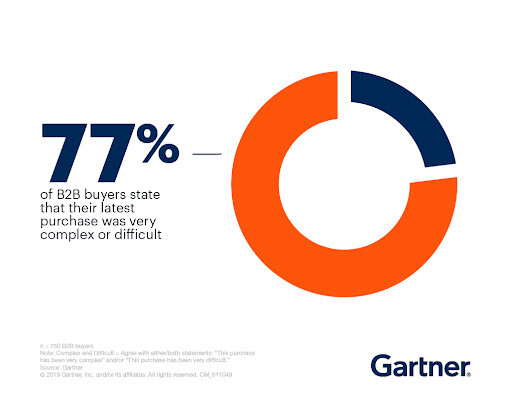
All of that complexity can leave buyers feeling overwhelmed and lost. They want to guide their own research and decision-making but lack the tools to find the right solution (all while your GTM teams struggle to keep up with live demos for potentially unqualified buyers).
Enter demo automation software. These platforms create personalized product demos on demand, giving buyers the ability to explore your product at their own pace and understand its full value. And it’s not just a game-changer for buyers. Sales, presales, marketing, and even customer success teams can use demo automation software to streamline and accelerate the demo process.
The best demo automation tools can:
- Turn videos and screen captures into interactive, on-demand demos
- Generate interactive product tours and simulations from simple click paths
- Craft customized demo journeys tailored to each buyer’s role, industry, or use case
- Personalize demos at scale using AI, including dynamic data, branding, and environments
- Capture and analyze buyer intent data to inform sales follow-ups
- Identify and track multiple stakeholders and how they interact with content
- Add interactive elements (like clickable hotspots) to keep buyers engaged
- Recommend the best content to send based on buyer behavior and engagement signals
- Create a seamless transition from demo engagement to the next stage of the pipeline
- Guide new clients through onboarding by delivering product education asynchronously
- Integrate with CRM and GTM systems to turn demo engagement into actionable sales insights
Best Demo Automation Software Tools at a Glance
|
Platform |
Best For |
Ideal Use Case |
|
Consensus |
Enterprise sales teams |
Scaling personalized, trackable demo experiences |
|
Storylane |
Marketing and growth teams |
Creating product tours for websites and campaigns |
|
Navattic |
Demand gen teams |
Building lightweight, no-code demo experiences |
|
Walnut |
Sales reps |
Delivering tailored, rep-driven demos in live deals |
|
Reprise |
Mid-market to enterprise teams |
Managing live, guided, and sandbox demos in one place |
|
Coast |
Early-stage startups |
Telling simple, narrative-driven product stories |
|
Demoboost |
Sales and presales teams |
Tracking demo engagement and performance |
|
Demostack |
Technical sales teams |
Controlling demo environments and data |
|
Omedym |
RevOps and technical teams |
Managing backend demo infrastructure at scale |
|
Saleo |
Sales engineers |
Manipulating data in real-time during demos |
|
TestBox |
Technical buyers and teams |
Providing product trials and sandbox environments |
Why G2 Ratings Matter in Demo Automation
When evaluating demo automation software, G2 rankings offer a helpful snapshot of how real users rate the category. G2’s Demo Automation category currently places Consensus at #1, based on its G2 Score and verified customer reviews. That gives buyers a fast way to see which platforms are consistently delivering strong results in the market.
Types of Demo Automation Software
Not all demo automation software are created equal. The best software supports multiple demo formats designed for different stages of the buying journey, including:
- On-demand video demos: On-demand Video demos are personalized, pre-recorded experiences that showcase your product in action. Modern platforms use AI to tailor each demo to the buyer’s role, use case, and priorities, delivering a relevant product story without requiring a live walkthrough. These demos are easy to share across email, websites, and sales workflows, giving buyers a flexible way to learn on their own time.
- Interactive product tours: Interactive product tours are guided, clickable walkthroughs that allow buyers to explore your product in a structured way. These experiences often include AI-generated storyboards, voiceovers, and contextual pathways, helping buyers understand how the product fits into their workflow. They’re widely used across marketing, sales, and onboarding to deliver hands-on, self-serve education.
- Automated product simulations: Product simulations are interactive demo environments that replicate your product without requiring engineering support. Unlike traditional sandboxes, simulations are easy to create, personalize, and scale, allowing teams to tailor experiences for different personas and use cases. Buyers can explore a controlled, data-rich version of the product, while teams capture engagement insights to understand what matters most and guide follow-up.
- Sandbox solutions: Sandbox solutions are isolated testing spaces where buyers can interact directly with a product without impacting live systems. While they offer hands-on access, sandboxes require significant setup, including infrastructure, sample data, and engineering support. This makes them difficult to scale and less suited for guided, sales-driven experiences (especially for non-technical buyers).
Benefits of Demo Automation Software
The best demo automation tools deliver value across your entire go-to-market team.
Here are just a few of the benefits of using demo automation software:
- Shortening the sales cycle: Companies using demo automation software see almost 80% shorter sales cycles. Why? Demo automation software can reduce demo lag time, eliminate unqualified demos, reduce the need for live demos, and streamline follow-ups by tracking buyer engagement with each demo. This efficiency shortens the overall timeline from initial interest to close.
- Reducing the number of live demos: Companies that use demo automation report needing fewer live demos to close a deal since buyers can investigate the product on their own time. It also avoids repeat demos by enabling buyers to share a demo with stakeholders and other decision-makers.
- Removing the number of unqualified demos: Research shows that 30% of presale demos are unqualified. Demo automation software can vet your leads by showing them pre-configured demos and tracking their intent data to tell you when they’re ready for next steps.
- Improving buyer enablement: Demo automation software empowers buyer to self-educate. They can explore your product at their own pace, allowing them to gain a deeper understanding of how it fits their needs before they engage with sales.
- Tracking buyer intent data: Engagement insights can improve the overall buyer experience, boost win rates, and shorten sales cycles. This data (which includes metrics like how many times your demo was shared with stakeholders and the average amount of time viewers spent watching it) tells you exactly when buyers are ready to move forward.
- Improved customer success and onboarding: Demo automation extends beyond the sale, giving customer success teams a scalable way to onboard and educate new users. Interactive demos can guide customers through key workflows, reinforce value, and drive faster adoption.
The Best Demo Automation Software Tools
The demo automation picks below were selected based on their core capabilities, flexibility across different demo use cases, and fit within modern B2B sales workflows. Customer feedback from platforms like G2 and TrustRadius also informed this roundup to highlight real-world strengths and tradeoffs.
Let’s review some of today’s best demo automation software tools.
1. Consensus

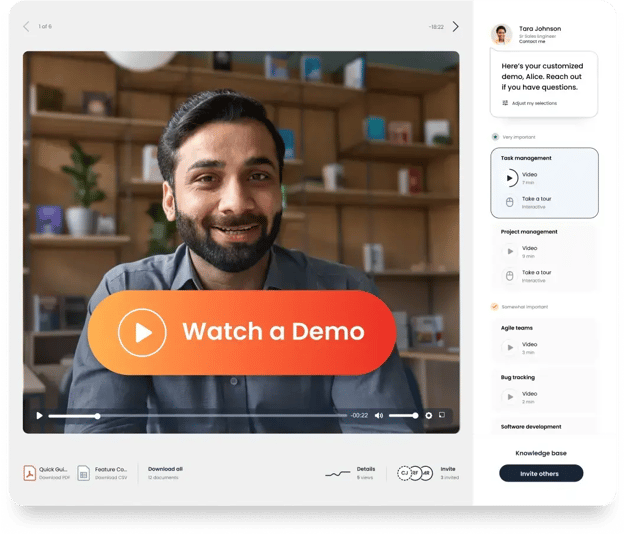
Consensus is an AI-powered product experience platform built to help revenue teams create and deliver personalized demos at scale. Buyers can skip the live call and explore your product through on-demand video demos, automated simulations, and interactive tours on their own time.
With Consensus AI, simple click paths become polished, personalized demo experiences in minutes. Prompt-based inputs make it easy to update branding, data, and messaging, while AI generates storyboards, voiceovers, and guided simulations. Behind the scenes, the platform learns from buyer engagement to continuously optimize demos and surface what’s working.
As demos get shared across a deal, Consensus tracks how each stakeholder engages (what they view, what resonates, and when new decision-makers get involved) so teams can act on buying signals at just the right time.
Pros:
- Creates personalized demos at scale without manual effort
- Supports multiple demo formats in one platform
- Turns simple product clicks into fully produced demo experiences with voiceover and narrative
- Adapts demo content automatically based on buyer input and interests
- Gives visibility into which stakeholders engage and what they care about
- Helps champions share demos internally with other decision-makers
- Keeps demo quality consistent across reps and teams
- Reduces dependency on presales for early- and mid-stage demos
- Makes it easy to update demo content as products evolve
- Helps sellers decide what to send next based on buyer behavior
Cons:
- Requires onboarding to take full advantage of advanced features
- Involves budget considerations that may not align with leaner teams
Pricing:
- Starter: From $600/month
- Pro: From $1,250/month
- Enterprise: Custom pricing available upon request
Customers love: Unique buyer insights, ease of use, flexibility, time-saving features, and an improved buyer experience
“Consensus has repositioned how I operate. It stops the endless cycle of repeat live demos; prospects can just click through a personalised version on their own time… The best part? My team can get our best pitch in front of clients whenever they need to, even if I'm stuck in meetings or offline. It’s basically like being in three places at once!” – G2 user
“The ease of use is what I like best. It’s really quick and easy to add a link to an email, and I can search through content in a matter of seconds to determine which demo is best to send to a customer. It quickly answers many of the customer’s questions upfront, which makes qualifying them far less time-consuming. I use it almost every day, and it has genuinely made my job much easier.” – G2 user
“We’ve had a brilliant experience with Consensus. It has become a core part of how we drive digital selling and scale our GTM efforts. The Demolytics are a standout feature. They provide clear insight into buyer intent and engagement, helping our sellers and leaders focus on the right deals at the right time.” – G2 user
Consensus users see 50% larger deal sizes, double their number of deals, and reduce their sales cycle by 30%. G2 ranks them as the #1 demo automation platform in the world.
Ready to take your demo-building to the next level?
2. Storylane

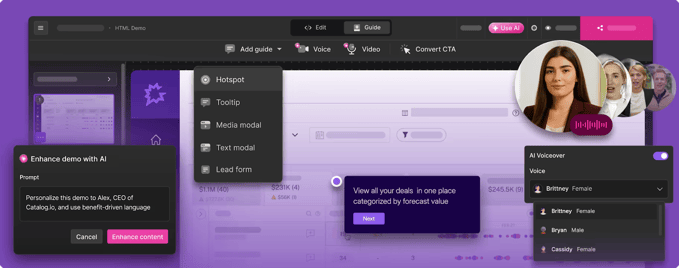
Storylane is an interactive demo platform that lets users create guided demos and sandbox environments . It uses AI to generate and personalize demo flows, capture and qualify buyer intent, and surface engagement insights. Teams can also record product experiences with a browser extension and turn them into interactive demos.
Pros:
- Generates demo flows quickly with AI
- Qualifies leads by tracking and scoring buyer intent
- Supports both guided demos and sandbox-style exploration in one tool
- Makes it easy to capture product flows with a browser extension
- Balances speed of creation with solid customization options
Cons:
- Requires hands-on editing to make AI-generated demos usable
- Limits backend simulation compared to sandbox-first platforms
- Depends on accurate configuration for reliable intent scoring
- Takes time to fine-tune AI-generated flows for complex use cases
Pricing:
- Free: $0/month
- Starter: $40/month
- Growth: $500/month
- Premium: $1,200/month
- Enterprise: Custom pricing available upon request
Customers love: User-friendliness and simplicity
3. Navattic

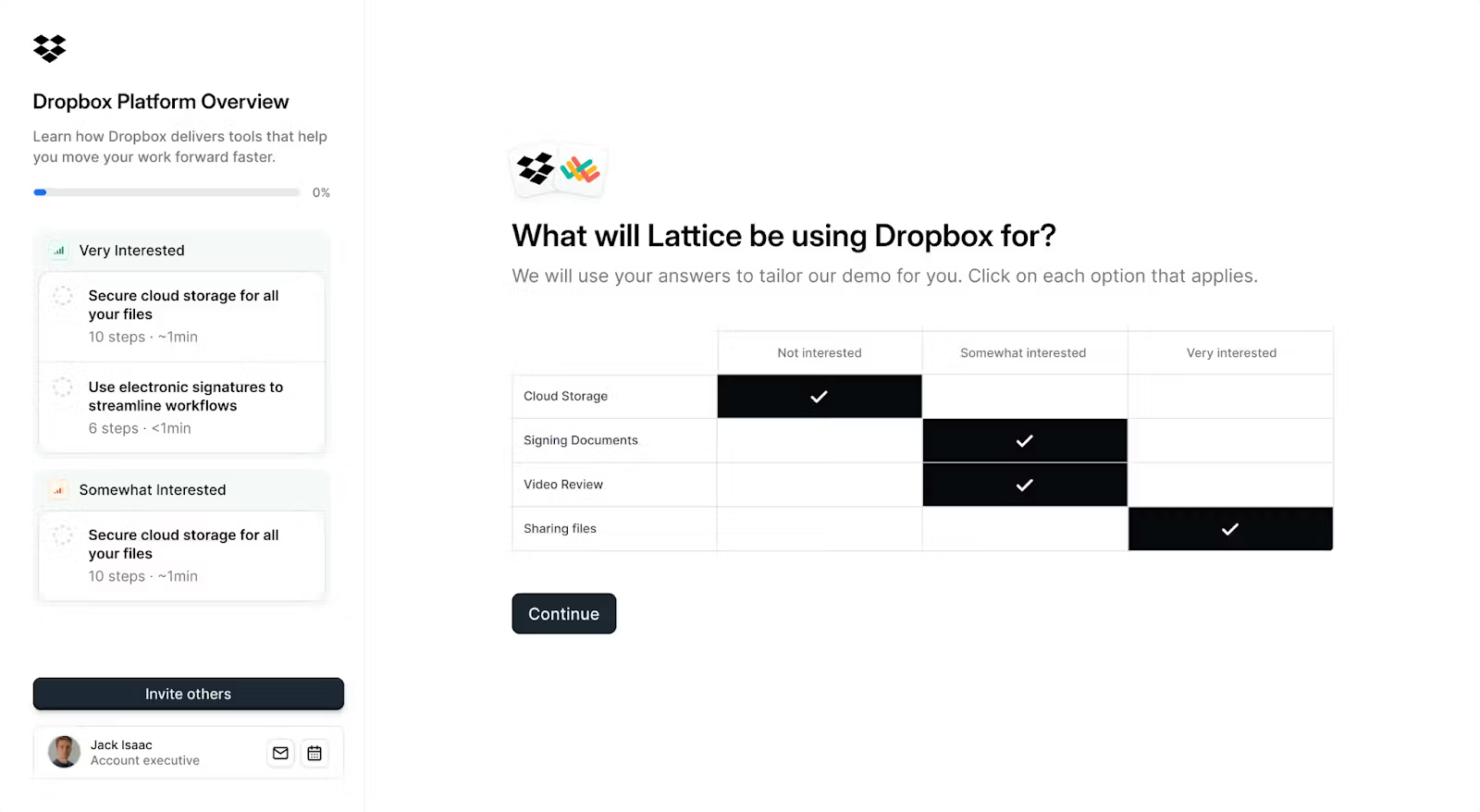
Navattic is an interactive demo software that lets users create self-guided demos that mimic their software. Users record their application, add guided steps and UI overlays, and share the demo via link or embed it on their website. It doesn’t require a live environment or backend, and includes analytics to track how viewers move through the demo and where they drop off.
Pros:
- Builds self-guided demos that buyers can explore without a rep
- Makes it easy to embed demos on websites for top-of-funnel conversion
- Tracks engagement at the account level, not just individual viewers
- Routes demo activity into CRM and Slack for faster follow-up
- Keeps demos lightweight and fast to load compared to full environments
Cons:
- Lacks full backend and sandbox functionality
- Requires manual updates when UI or product flows change
- Limits customization beyond front-end interactions
- Feels less realistic for highly technical or data-heavy products
Pricing:
- Starter: $0/month
- Starter Plus: $50/month
- Base: $600/month
- Growth: $1,200/month
- Enterprise: Custom pricing available upon request
Customers love: Ease of use and customer support
4. Walnut
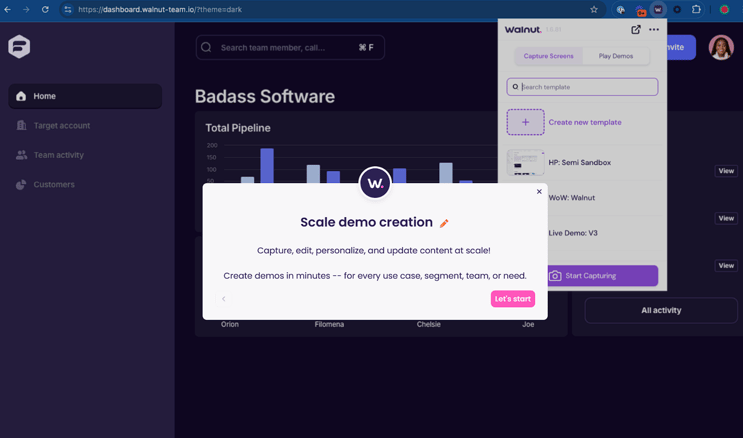
Walnut uses a browser extension to capture software screens and create interactive demos. The demo automation software offers guided templates that users can edit by updating text, adding visuals, and layering in notes. Teams can share demos on their website, integrate them into sales enablement tools, or present them live during calls.
Pros:
- Captures and builds interactive demos quickly with a browser extension
- Customizes demos with editable templates and dynamic content
- Supports both live presentations and embedded demos
- Integrates with common sales and enablement tools
- Offers strong customer support and onboarding
Cons:
- Relies on captured screens instead of full product environments
- Requires updates to keep demos aligned with product changes
- Offers less flexibility compared to fully sandboxed demo platforms
- Limits customization to what templates allow
Pricing:
- Ignite: $750/month
- Accelerate: $1,550/month
- Scale: Custom pricing available upon request
Customers love: Customer support and customization options
5. Reprise
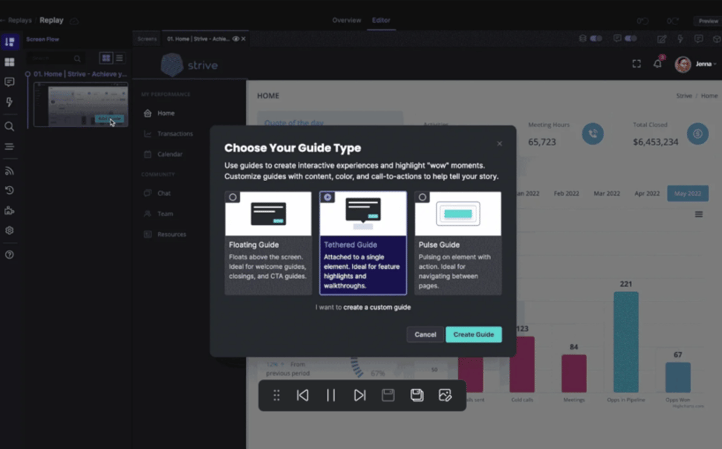
Reprise lets users create live demos, interactive product tours, and sandbox environments. Spin up live demos, guided tours, or full sandbox environments, then swap in buyer-specific data so every demo feels like the real thing without touching production. Teams can use the platform to standardize demos, reuse what works, and stop rebuilding the same flows for every deal.
Pros:
- Supports multiple demo formats, including live, guided tours, and sandboxes
- Offers flexible capture options for different demo use cases
- Personalizes demos with buyer-specific data
- Builds tailored demo workflows for different audiences and scenarios
- Combines storytelling and hands-on product exploration
Cons:
- Requires setup to create and maintain demo environments
- Needs ongoing updates to stay aligned with the product
- Takes time to build polished, personalized demo workflows
Pricing: Custom pricing available upon request
Customers love: Easy demo creation and helpful customer support
6. Coast

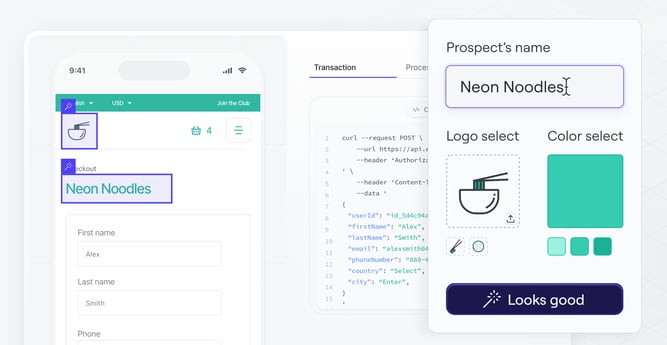
Coast is built for API products or products without a traditional user interface. Users can create interactive demos that show both the back and front end of your product. They can generate custom links for each demo they send to provide a unique experience to each viewer and track their analytics.
Pros:
- Built specifically for API-first products and non-UI experiences
- Demonstrates backend functionality in a clear, visual way
- Generates unique demo links for personalized buyer experiences
- Tracks engagement to show how buyers interact with demos
- Requires minimal setup compared to full product environments
Cons:
- Focuses on API workflows instead of full product experiences
- Offers less value for products with rich user interfaces
- Limits design flexibility compared to UI-based demo tools
- Depends on clear API structure to create effective demos
Pricing: Custom pricing available upon request
Customers love: Ease of use
7. Demoboost

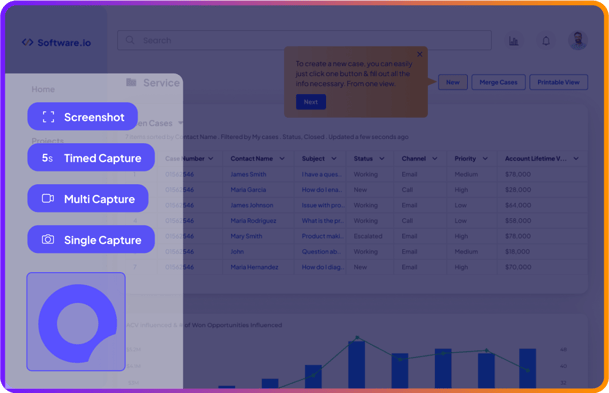
Demoboost is a product demo software that lets users capture their screens in various ways and edit recordings for specific buyers. Teams can turn them into interactive demos, build a demo library, and embed them into other sales enablement tools. The platform also provides engagement metrics like viewer activity, completion rates, and net promoter score.
Pros:
- Captures and edits demos quickly with minimal setup
- Tailors recordings for specific buyers and use cases
- Builds a reusable library of interactive demos
- Embeds demos across sales and enablement tools
- Tracks engagement with clear, actionable metrics
Cons:
- Relies on recorded content instead of live or sandbox environments
- Offers less flexibility than fully interactive demo platforms
- Requires ongoing updates to keep recordings current
- Limits real-time customization during live conversations
Pricing: Custom pricing available upon request
Customers love: Ease of use and visual quality
8. Demostack

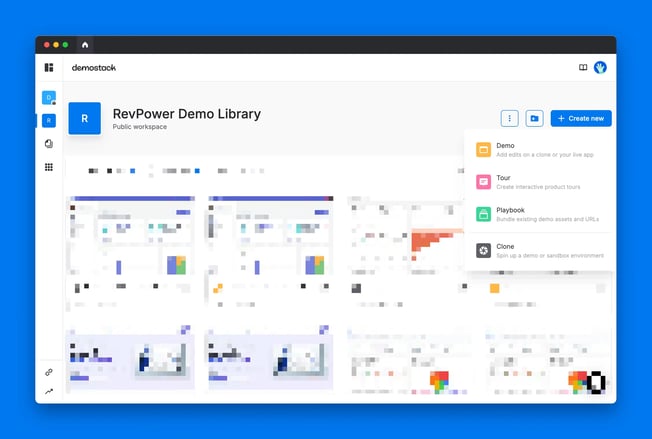
Demostack lets users clone their product’s front end and back end to create fully interactive demos. Teams can shape each demo around the buyer by highlighting specific features and using data that reflects their world. The platform also supports sandbox environments buyers can explore and share with others.
 Pros:
Pros:
- Clones the full product experience for highly realistic demos
- Tailors demos with buyer-specific data and use cases
- Enables shared sandbox environments for hands-on exploration
- Supports collaboration between reps and buyers during the demo process
- Organizes demo workflows and assets with Demo Playbooks
Cons:
- Requires setup to accurately replicate and maintain the product environment
- Needs ongoing updates to stay in sync with the live product
- Involves coordination with product or engineering for complex scenarios
- Introduces more complexity than lightweight demo tools
Pricing: Custom pricing available upon request
Customers love: Engagement and customization features
9. Omedym

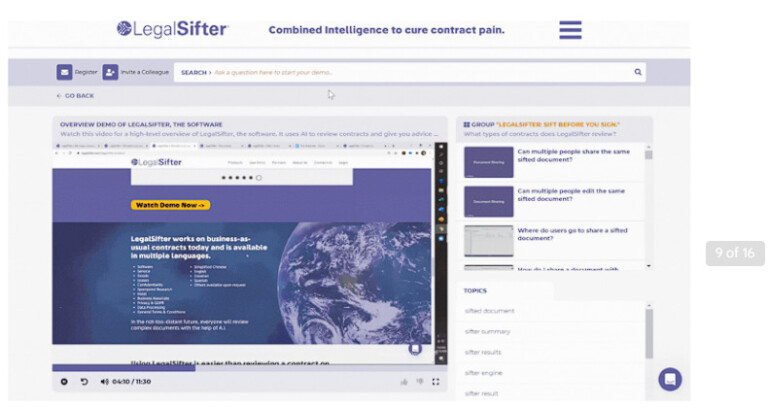
Omedym turns existing content into interactive demos and digital sales rooms, creating a central hub for demos and related content. The platform uses AI-powered natural language processing to make content searchable for buyers and surface engagement insights for reps.
Pros:
- Turns existing content into interactive demos with minimal lift
- Creates centralized digital sales rooms for sharing demos and collateral
- Makes content searchable, improving buyer navigation and experience
- Provides engagement insights to help reps track buyer interest
- Supports content reuse across multiple deals and touchpoints
Cons:
- Depends on the quality and structure of existing content
- Offers less control than custom-built demo environments
- Requires ongoing content updates to stay relevant
- Focuses more on content management than product experiences
Pricing:
- Standard:$29/month
- Professional: $49/month
- Enterprise: $90/month
Customers love: Content management options
10. TestBox
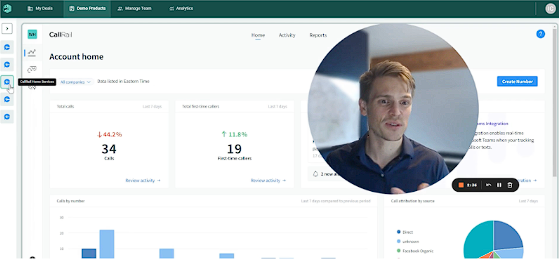
TestBox is an interactive demo and sandbox (proof of concept) solution that lets teams replicate their product and give buyers a hands-on environment to explore. It uses AI to auto-populate sandboxes with data tailored to each buyer so they can test out scenarios that reflect their specific use cases.
Pros:
- Delivers highly personalized, data-driven demo environments
- Reduces manual effort with AI-powered sandbox population
- Helps accelerate technical validation in complex sales cycles
- Enables buyers to explore the product independently
- Integrates with common data sources and workflows
Cons:
- Requires initial setup and ongoing maintenance to mirror the product accurately
- Becomes overkill for simple or transactional sales motions
- Depends on data quality to deliver the best demo experience
- Focuses less on top-of-funnel storytelling than lighter demo tools
Pricing:
- Startup: From $44,750/year for 15 users
- Growth: From $59,500/year for 15 users
- Enterprise: Custom pricing available upon request
Customers love: Data integration and ease of use
Features to Look for in Demo Automation Software Tools
Most demo automation tools promise efficiency, but the right features determine whether your demos scale or stall. The best software goes beyond creation, helping you personalize, engage, and convert. Here’s what to look for:
AI and Automation Opportunities
More than 80% of sales teams using AI saw revenue growth this year. AI-powered demo automation software delivers deeper personalization, advanced demo video analytics, easier content creation, and clearer buyer intent—at much faster speeds.
Integration and Sharing Capabilities
When 51% of buyers say there are too many steps to access content, even small barriers risk stalling deals. Look for demo automation tools that integrate seamlessly into your tech stack and make demos easy to share, whether it’s reps sending them to buyers via e-mail or Slack, or buyers passing them along to their team.
Customization Options
More than 70% of consumers expect personalized interactions with sellers. Your demo automation software tool should offer ways to tailor each demo to your buyers’ needs and use cases. Features like dynamic content selection, personalized welcome messages, and custom demo paths based on buyer preferences ensure every experience feels relevant and valuable.
Detailed Analytics and Reporting
With in-depth analytics, you get a clear view of how buyers are engaging with your product. You can see which features they explored, how long they watched, and who they shared it with. Armed with this intel, you can identify decision-makers, qualify leads based on real intent, and prioritize high-potential follow-ups.
And you don’t have to manually sift through the data or piece together what to do next. Many platforms now use AI to turn engagement signals into clear next steps—one reason 83% of sales teams using AI report revenue growth, compared to 66% without.
Security and Access Control
Demos don’t just show your product; they can expose real data, internal workflows, and configuration details. Without the right controls, anyone with a link can view, share, or misuse that information. Your demo automation platform should let you gate access, control visibility at the field or environment level, and shut off access instantly when a deal changes.
Choose the Best Demo Automation Software Tool for Your Team
Demo automation software unlocks the full potential of your product and turns more buyers into loyal customers. With Consensus, you’re not just upgrading your demos—you’re leveling up how buyers experience your product from first touch to close.
Consensus delivers AI-powered personalized experiences through secure, interactive demos on demand. Its full-funnel demo automation suite helps you:
- Deliver tailored, AI-personalized experiences for every buyer with relevant content they can explore at their own pace
- Scale interactive demos across your entire revenue team so reps can focus on high-impact activities
- Streamline decision-making with AI-driven buyer insights that align stakeholders and shorten sales cycles
- Automate workflows to deliver consistent, high-quality demo experiences at scale
- Equip customer success teams with on-demand content that drives product adoption and strengthens retention
- Generate demo variants for different industries, personas, and use cases with Consensus AI
- Centralize product storytelling with Demo Hub so teams can quickly find, customize, and share demos that convert
There is no need to make buyers wait to understand your product. Let your demos handle the selling so your team can focus on closing.
Get your personalized demo from Consensus to see it in action.
Automated Software Demo Platforms Compared to Manual Demonstrations
Automated demo platforms enable teams to deliver consistent, on-demand product experiences that scale across marketing, sales, and customer education without requiring a live presenter. They’re especially effective for driving top-of-funnel engagement, qualifying leads, and giving prospects a self-serve way to explore key features.
Manual demonstrations, on the other hand, allow for real-time personalization, deeper discovery, and dynamic responses to buyer questions, making them more impactful in later-stage sales conversations. Most high-performing teams use a hybrid approach (automated demos to generate interest and manual demos to tailor the experience and close deals).