


Supademo carved out its niche by making interactive demos easy. It gives early-stage SaaS teams a fast way to turn product screenshots into clickable guided tours without engineering support. For startups launching their first product or small marketing teams adding quick demos to landing pages, the simplicity of Supademo is hard to beat.
But growth changes the equation. As products mature, screenshot-based tours can start to undersell the experience. Design nuance disappears. Complex workflows get reduced to static steps. And as features expand or segments multiply, maintaining separate flows becomes harder to scale.
That’s when teams start looking at Supademo alternatives. Not because Supademo stops working, but because their product, brand, and sales motion have evolved beyond what static capture tools were designed to support.
And the stakes are real. Gartner reports that 77% of B2B buyers describe their latest purchase as complex or difficult. When evaluation feels that heavy, lightweight screenshot tours can struggle to carry the load.
For teams ready to level up, this guide explores top Supademo alternatives built for more sophisticated product storytelling and buyer enablement. From early-stage marketing experiences to enterprise-ready platforms, each offers a different path forward as your sales motion evolves.
The Main Reasons Sales Teams Look for Alternatives to Supademo
Supademo works well for lightweight product tours. But as companies grow and go-to-market strategies evolve, many sales teams outgrow the platform. Here’s why they start looking elsewhere.
They Have More Complex Sales Cycles
Enterprise B2B sales rarely follow a straight line. Multiple stakeholders evaluate the product from different angles and on different timelines. A linear, screenshot-based
demo gives reps little control over how the experience unfolds and limited data on how each stakeholder moves through it.
There’s also the challenge of internal alignment. Within a single buying committee, the technical lead reviews architecture, the finance stakeholder evaluates ROI, and the end-user considers workflow fit. Static walkthroughs force everyone through the same narrative, regardless of their priorities.
Modern sales teams need:
- Stakeholder engagement tracking: Visibility into who's viewing demos, time spent on each section, and which features resonate with different roles
- Multi-threading capabilities: Easy demo sharing across buying committees with tracking that reveals organic stakeholder discovery patterns
- Deal-level analytics: Connection between demo engagement and pipeline progression to prove ROI and optimize sales strategies
And tailoring static demos? That requires creating separate versions or rebuilding flows. The resulting delay opens the door for competitors to engage buyers before your team regains momentum.
Teams Need Interactive Demos That Drive Pipeline
The difference between Supademo’s screenshot tours and truly interactive product experiences is like comparing a brochure to a test drive. Modern buyers want to try before they buy, and your product demo software needs to support that with:
- Clickable product simulations: Buyers navigate through actual product interfaces, test features, and experience workflows in controlled environments
- Personalized demo paths: Platforms adapt content based on buyer selections, showing relevant features while hiding unnecessary complexity
- Sandbox environments: One-click access to data-rich proof-of-concept experiences that eliminate engineering setup and time constraints
Interactive demos convert at higher rates because they surface clear buying signals. When a buyer spends 15 minutes exploring your API documentation but only two minutes on pricing, that tells you exactly how to approach your follow-up conversation.
Buyers Expect a Self-Serve Demo Experience (Not a Walkthrough)
B2B buyers, particularly millennials and Gen Z who represent 64% of decision-makers, prefer self-directed research over scheduled sales presentations. Supademo's linear walkthrough approach doesn't match modern buyer behavior, where buyers want to choose their own path, explore features relevant to their specific use case, and access product information 24/7.
Self-serve experiences allow buyers to dive deep into capabilities that matter most to them while providing sellers with valuable intent data about buyer priorities. The shift reflects buyers' desire for control over their evaluation process, leading to more informed purchasing decisions and shorter sales cycles.
Recommended Supademo Alternatives for You to Consider
This curated roundup of Supademo alternatives was developed by evaluating each platform’s hands-on capabilities, feature depth, and alignment with modern B2B sales workflows. Customer feedback across G2, Capterra, TrustRadius, and Reddit was also reviewed to surface real-world strengths and tradeoffs.
Below is a detailed breakdown of each recommended Supademo alternative, including strengths, limitations, and ideal use cases:
1. Consensus
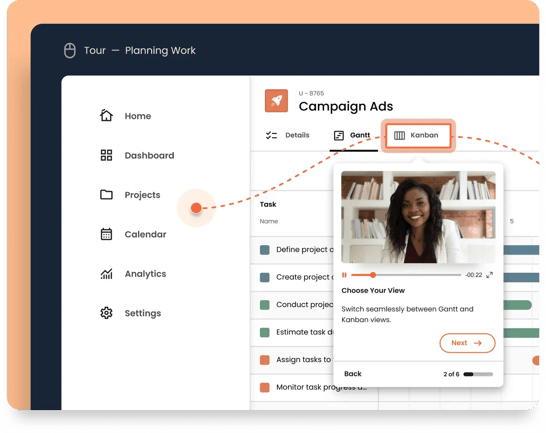
Consensus is an AI-powered product experience platform built for deals where one demo isn’t enough. It brings on-demand video demos, interactive product tours, and automated product simulations into a single, shareable experience that adapts as new stakeholders access it.
When a champion forwards a Consensus demo to their CFO or technical lead, each stakeholder sees what’s relevant to them (and sales sees it happening in real time). Instead of hoping the story lands, teams can see how buying decisions are forming and engage new stakeholders as they enter the deal.
Why teams switch from Supademo to Consensus
- AI-powered demo creation: Use Consensus AI to generate, personalize, and optimize demo experiences quickly so content keeps pace with buyer behavior
- Personalized video demos: Let buyers select the features they care about and deliver tailored video tours while capturing intent data on their priorities
- DemoBoards and stakeholder discovery: Enable champions to share demos internally while revealing who engaged and what each stakeholder explored
- Actionable intent data: Surface feature rankings, organizational heat maps, and engagement signals that guide next steps
- Stage-specific demo strategy: Deploy the right demo experience for discovery, technical review, or final validation
- Enterprise integrations: Connect demo engagement to CRM, sales engagement, and marketing automation systems to tie activity directly to pipeline
Pros
- “I enjoy the increased visibility I get into what content buyers engage with, which makes for a more targeted sell to their core interests.” – G2 user
- “The initial setup is really easy, and the implementation is light touch.” – G2 user
- “I really appreciate how Consensus integrates seamlessly with Gmail, making it incredibly easy to send and attach interactive demos directly within emails.” – Capterra user
- “The real-time notifications on client activity provide crucial insights into engagement levels and intent, helping guide my follow-up strategy.” – Capterra user
- “The AI adds transitions, cursor tracking, and auto-edits the flow, so it feels clean without spending hours on post-production.” – Reddit user
- “The biggest win for us is how much time [Consensus] saves our SEs. Before this, they were spending half their week giving early demos to people who weren’t even serious.” – Reddit user
Cons
- “Needs some time investment at first but pays back.” – Capterra user
- “There’s a bit of a learning curve when setting up your first demos, especially if you’re trying to get the flow just right. But once it’s live, the impact is worth it.” – Capterra user
- “Sometimes the Outlook add-in doesn’t work properly, but this is more of a rare case and doesn’t hinder productivity too much. There’s another route to add demos manually if the issue occurs.” – Capterra user
Pricing
- Starter: From $600/month
- Pro: From $1,250/month
- Enterprise: Custom pricing available upon request
2. Arcade
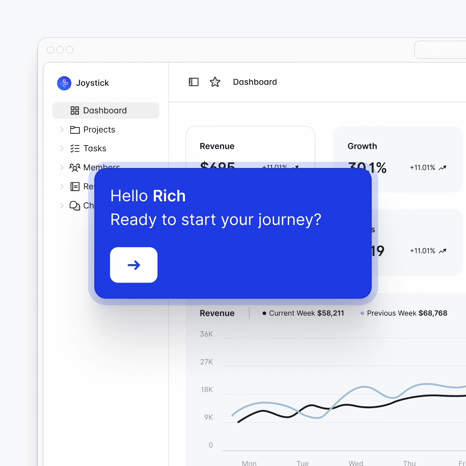
Arcade is an AI-driven demo tool for creating interactive, presentation-ready product tours without heavy setup. It’s commonly used by marketing and enablement teams for product education, customer onboarding, and lead generation. Teams can build polished walkthroughs using a Chrome extension, desktop app, or Figma plugin.
Why teams switch from Supademo to Arcade
- AI-assisted creation: Generate demo scripts, tooltips, and on-screen text to speed up production and maintain consistency
- Advanced visual editing: Add pan, zoom, and motion effects to create more dynamic demos than basic slide-style transitions
- Multimedia integration: Combine screenshots, video, GIFs, and interactive elements within a single demo experience
- Branching paths and engagement tracking: Build choose-your-own-path demos and monitor completion rates, drop-offs, and viewer interaction
Pros
- “Intuitive user experience, backed with good help docs, getting started templates, and online support.” – G2 user
- “It is very easy to create demos without coding. I don't need engineering help or complex tools.” – G2 user
- “The new AI tool also makes building easier, and I particularly like how it creates screenshots that can be easily duplicated and edited.” – G2 user
Cons
- “Sometimes demos can feel too linear, especially if the product has many possible paths.” – G2 user
- “Advanced customization options are limited… I want more control over design or branding.” – G2 user
- “We ended up dropping it because we needed something more connected to our CRM and sales motion. Arcade felt more like a marketing tool than something we could scale across the whole funnel.” – Reddit user
Pricing
- Free: $0/month
- Pro: $32/month
- Growth: $42.50/month per user
- Enterprise: Custom pricing available upon request
3. Demoboost
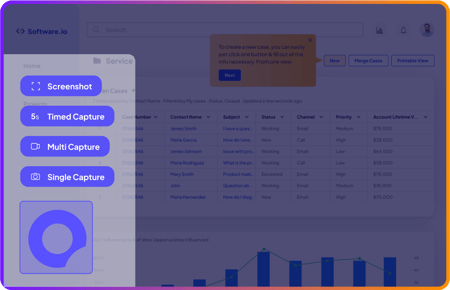
Demoboost is a demo automation platform designed specifically for sales engineers and presales teams to create personalized demo environments without engineering support. It helps teams reduce demo prep time, eliminate technical failures during live presentations, and scale personalized demonstrations across complex sales cycles.
Why teams switch from Supademo to Demoboost
- Demo environment cloning: Create multiple customized demo instances from production without affecting live systems
- Data personalization: Tailor demo data to reflect buyer company names, use cases, and industry context
- Speaker notes for SEs: Use speaker notes and structured workflows to deliver consistent demos across the team
- Demo analytics and feedback: Monitor demo engagement, collect buyer feedback, and use insights to refine future presentations
Pros
- “It turns our static presentations into interactive, story-driven tours that communicate the depth of our work effectively.” – G2 user
- “I especially appreciate how easy it is to edit screens, reducing manual work needed.” – G2 user
- “Sharing a bespoke demo link ensures clients see exactly what we’ve built, and the built-in notifications help me track client engagement.” – G2 user
Cons
- “There are many features and figuring out how to use them all takes some time.” – G2 user
- “Demos can sometimes take too long to load, which could deter customers.” – G2 user
- “While capturing a screen is easy, it can be time-consuming to organize the screens for the demo flow.” – G2 user
Pricing: Custom pricing available upon request
4. GuideFlow
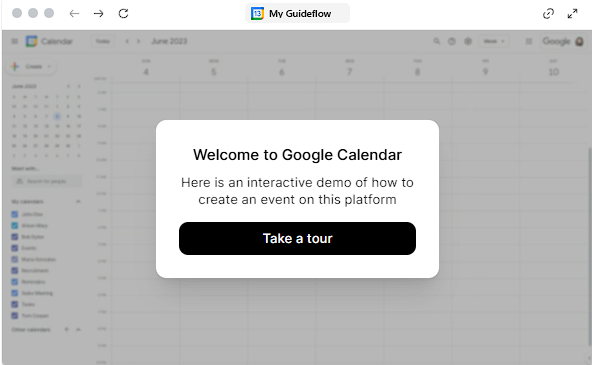
Guideflow is an interactive demo platform that captures your product interface and turns it into guided, clickable experiences without relying on static screenshots. It’s built for teams that need strong data security standards and deeper personalization controls, including support for regulated industries and enterprise requirements.
Why teams switch from Supademo to GuideFlow
- Live product capture: Capture your live interface so demos reflect the current product without constantly recreating screenshots
- HTML-based demos: Let buyers click, scroll, and move through real interface elements instead of viewing static steps
- Dynamic data integration: Show realistic or account-specific data inside demos to make scenarios feel credible
- Lead capture integration: Place forms and CTAs directly within the demo to collect buyer information at key moments
Pros
- “It takes almost no effort to tailor a flow to a specific persona or account, and it actually feels natural.” – Product Hunt user
- “When a feature is added, I can simply add a step instead of re-recording the entire demonstration.” – G2 user
- “Analytics are great and allow us to measure efficiency of our workflows. Perfect if you want to refine your self-service demo.” – Product Hunt user
Cons
- “Some customization features are a bit of a pain. I wish there was an ‘apply to all’ button instead of changing each screen/demo separately.” – G2 user
- “Guideflow works well for basics but gets restrictive with sophisticated user paths.” – G2 user
- “Price is high for a solo biz like mine, who would maybe use it once or twice a month.” – Product Hunt user
Pricing
- Free: $0/month
- Solo: $35/month
- Growth: $499/month
- Advanced: $1,499/month
- Enterprise: From $2,999/month
5. Navattic
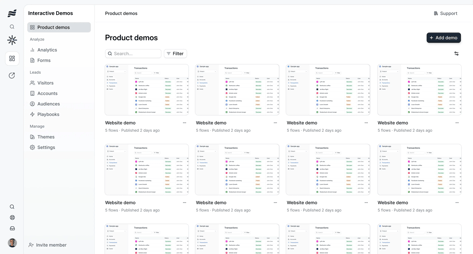
Navattic is an interactive demo platform for marketing and sales teams that want buyers to experience the product before talking to a rep. The platform uses HTML and CSS captures of your product to produce realistic click-through experiences you can feature on your website, in campaigns, and as sales follow-ups.
Why teams switch from Supademo to Navattic
- No-code product capture: Capture your live product interface and create interactive demos without engineering support
- Advanced personalization: Tailor demos with buyer-specific data, company names, and use-case scenarios to make each experience feel relevant
- Branching demo logic: Build multiple paths based on buyer selections so buyers can explore the features that matter most to them
- Comprehensive analytics: Track individual behavior, click patterns, and feature interest to give sales teams clear signals for follow-up
Pros
- “The no-code builder is incredibly intuitive—we can spin up or update complex procurement workflows in hours, not days. It significantly shortens our discovery calls because prospects come in already product-qualified after taking the tour. – G2 user
- “The product tours embed well into our webpage and provide a seamless taste of the product without the commitment of a full trial signup, driving trial conversion once users see what we can do.” – TrustRadius user
- “Integrations with our core CRM and marketing automation platform were smooth, letting us feed demo engagement data directly into our workflows. It’s been a valuable addition to our tech stack, giving the team clear insight into how prospects interact with our content.” – G2 user
Cons
- “I wish there was a way to clone the setup process when I’m sending multiple demos to the same customer, instead of having to re-enter all of the customer information each time.” – G2 user
- “Mobile experience of the demos is not the best.” – G2 user
- “Although I like the AI summarizations that highlight and add text in the proper steps, it still needs a human to review.” – TrustRadius user
- “The cost might be expensive for SMEs.” – TrustRadius user
Pricing
- Starter: $0/month
- Starter Plus: $50/month
- Base: $600/month
- Growth: $1,200/month
- Enterprise: Custom pricing available upon request
6. Storylane
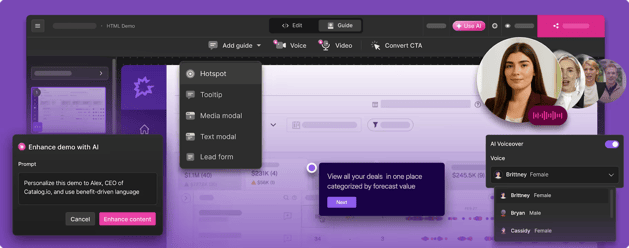
Storylane is an interactive demo platform used by marketing and sales teams to turn product experiences into pipeline. It helps teams move buyers from website interest to sales conversations with demos that feel close to the real product.
Why teams switch from Supademo to Storylane
- HTML capture technology: Capture real product interfaces instead of static screenshots, so demos behave more like the actual product
- Variable-based personalization: Insert buyer-specific details (like company name, industry context, and role-based messaging) directly into the demo
- Multi-path demo experiences: Let buyers choose their own route through the product based on what matters to them
- Detailed engagement analytics: See exactly what buyers clicked, how long they explored each section, and which features drove interest
Pros
- “The tool is so intuitive that you can set up and showcase your product in seconds.” – G2 user
- “The voiceovers are of high quality, with several voice types to choose from.” – G2 user
- “A major upside is how effortless it is to update demos. Instead of re-recording videos every time our platform UI changes, we can quickly replace individual steps while keeping everything consistent.” – G2 user
Cons
- “Sometimes the automated demo builder is clumsy or doesn’t work as described.” – TrustRadius user
- “Their in-platform analytics have improved, but could be more intuitive to help with ROI tracking.” – G2 user
- “The main thing I currently miss is stronger support for mobile-optimized demos. Since a significant share of traffic comes from mobile, it would be valuable to create demo experiences that are better tailored to smaller screens.” – G2 user
Pricing
- Free: $0/month
- Starter: $40/month
- Growth: $500/month
- Premium: $1,200/month
- Enterprise: Custom pricing available upon request
7. Walnut
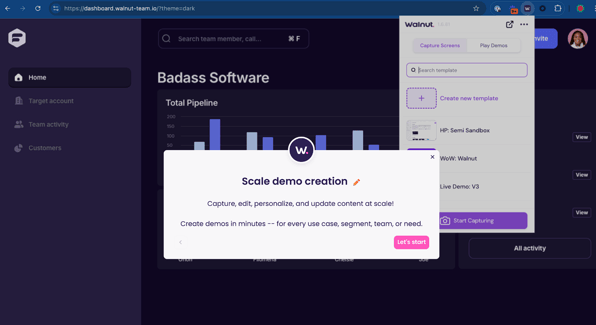
Walnut is a sales demo platform built for teams that need controlled, customizable demo environments. Instead of presenting from a live product, reps create separate demo instances they can tailor to specific accounts without engineering support. It supports both live presentations and shareable demos buyers can revisit later.
Why teams switch from Supademo to Walnut
- Buyer-specific customization: Personalize demos with buyer company data, logos, and industry-specific scenarios in minutes
- Failure-free demo environments: Run demos in separate instances to prevent technical issues, slow performance, or inappropriate data from appearing during high-stakes presentations
- Sales team collaboration: Enable multiple team members to access and customize shared demo templates while maintaining consistent messaging
- Advanced demo analytics: Track buyer engagement during and after demos to understand feature interest, engagement depth, and follow-up priorities
Pros
- “The flexibility to tailor demos for different industries or buyer personas is particularly valuable. It allows sales teams to present relevant workflows while maintaining consistency in messaging.” – G2 user
- “It’s a completely no-code platform, so I don’t need to code HTML or CSS to update the text or images.” – G2 user
- “I really appreciate the cloning feature for templates that allows us to iterate instead of starting from scratch, saving us significant time and effort.” – G2 user
Cons
- “Some demos don’t behave optimally on smaller screens, and editing or capturing workflows can feel sluggish at times.” – G2 user
- “Walnut is very difficult to use because there are no folders and all information is dumped into one large pile.” – G2 user
- “The pricing structure and upfront commitment were significant; with no free trial or monthly plan available, the investment felt substantial before we could fully evaluate the platform’s fit.” – G2 user
Pricing
- Ignite: $750/month
- Accelerate: $1,550/month
- Scale: Custom pricing available upon request
8. Tourial
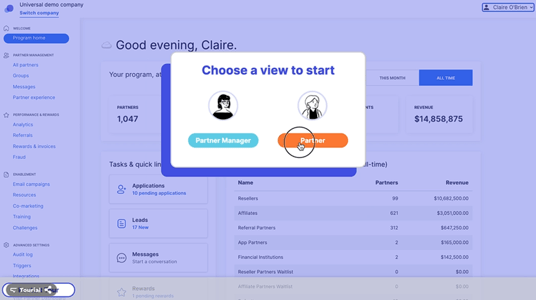
Tourial is an interactive demo platform built primarily for marketing teams. The platform centers on short, self-guided micro tours optimized for website conversion and marketing use cases.
Why teams switch from Supademo to Tourial
- Tour centers: Create centralized demo hubs where buyers select their journey based on role, industry, or specific challenges they want to address
- Persona-based demo paths: Show stakeholders customized experiences tailored to their priorities, whether they're technical evaluators, business decision-makers, or end users
- Lead scoring and qualification: Score buyer engagement automatically and identify high-intent leads based on demo interaction patterns and feature exploration depth
- No-code tour building: Build and update interactive product tours without requiring technical resources or engineering support
Pros
- “Tourial is crazy fast to build with—just record screens, add hotspots or voiceover, maybe branch it a bit—and you’ve got a demo up in minutes.” – Reddit user
- “At the admin level, I’m able to easily apply branding to the tours to ensure consistency across all tours, regardless of who is building them.” – G2 user
- “We initially conceived of using Tourial for new feature releases and quick sales-oriented tours… but have also realized it’s a very effective tool for in-house learning as well, complementary to something like (or even in place of) an LMS.” – TrustRadius user
Cons
- “The initial learning curve of the product is a bit difficult… and the initial build process is not very intuitive.” – G2 user
- “I’m not fond of the UX.” – Reddit user
- “Analytics are somewhat basic.” – TrustRadius user
Pricing
- Engage: Custom pricing available upon request
- Scale: Custom pricing available upon request
9. UserGuiding
UserGuiding is a digital adoption platform focused on post-sale onboarding and feature adoption. It overlays in-app tours, tooltips, and onboarding checklists directly inside web applications.
Why teams switch from Supademo to UserGuiding
- In-app guidance system: Create interactive tours and tooltips that appear within your product interface to guide users through workflows and features
- User segmentation capabilities: Target different guidance experiences based on user role, subscription level, usage patterns, or onboarding stage
- Onboarding checklist management: Build structured onboarding sequences that help new users complete key setup tasks and reach initial value milestones
- Resource center integration: Create searchable help centers and knowledge bases that users can access without leaving your product environment
Pros
- “I like the ease of creating and adjusting guides within UserGuiding without relying on the development team. I can test quickly and achieve good results.” – G2 user
- “With this tool, we have greatly reduced customer support related costs and increased customer retention and business revenue.” – G2 user
- “The analytics help us understand where users drop off and improve our adoption flows.” – G2 user
Cons
- “I’m disappointed that UserGuiding’s features aren’t available for mobile applications.” – G2 user
- “Some features are restricted in the lower plans that make it harder to use, such as number of domains and customization.” – G2 user
- “The actual experience of adjusting settings, look and feel can be a bit cumbersome.” – GetApp user
Pricing
- Free: $0/month
- Starter: $249/month
- Growth: $499/month
- Enterprise: Custom pricing available upon request
Choose the Best Supademo Alternative for You
The right Supademo alternative depends on the complexity of your sales motion. If you’re selling to a single decision-maker with a short evaluation cycle, a lightweight interactive demo may do the job. However, if you run enterprise deals with multiple stakeholders, extended review periods, and internal alignment requirements, your demo platform needs to support that.
In complex B2B environments, demos aren’t just presentations; they’re part of the decision infrastructure. Consensus is built specifically for that environment. The AI-powered product experience platform delivers personalized, role-based demo experiences while surfacing stakeholder engagement data and intent signals that revenue teams can act on.
Enterprise sales don't hinge on a single demo. They unfold across stakeholders, conversations, and internal validation. When your demo platform actively supports that progression throughout the pipeline, your demos shift from simple presentations to measurable drivers of revenue.
Turn your demos into revenue drivers with Consensus.